Writing / enterprise ai architecture
Retail AI Fails on the Shelf, Not the Model
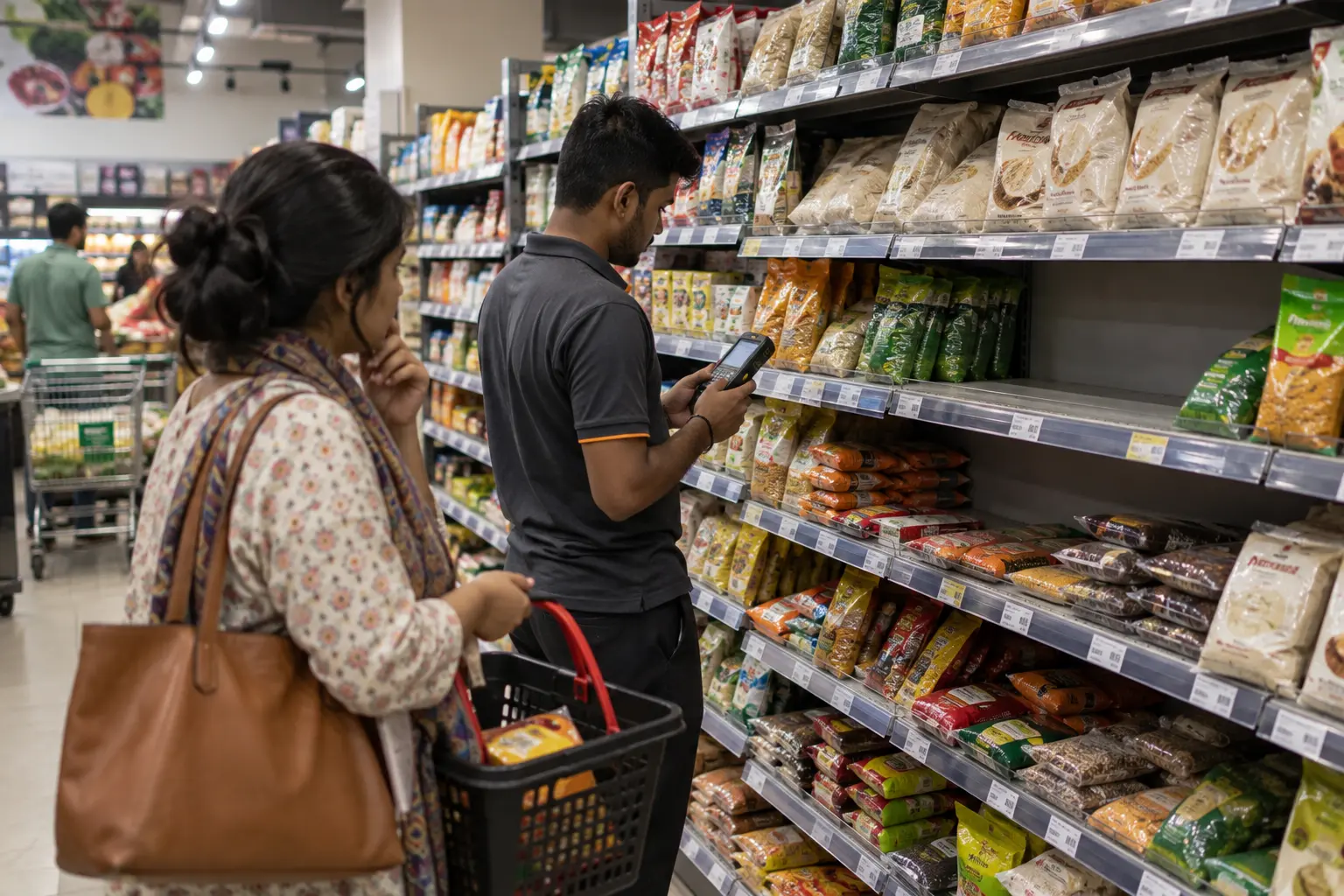
When a retailer decides to use AI against empty shelves, the first project is almost always a better demand forecast. It is measurable, vendors are ready to sell it, and it sounds like the root of the problem. My view is that it is usually the wrong first investment.
A customer does not experience a forecast. They experience a shelf. Between the two sit the accuracy of your stock records, the discipline of replenishment, and whether anyone in the store is allowed to act when something runs out. If any of those is weak, a better forecast barely changes what the customer sees.
This piece is for CIOs, CTOs and retail operations heads considering AI for availability. It explains why availability behaves like a chain, shows the arithmetic, and suggests where AI earns its place first.
The short version
Out-of-stocks have stayed stubbornly common for decades, and much of the cause sits in store execution rather than forecasting. Shelf availability behaves like a product of four terms, so the weakest term limits the result. Measure all four, fix the weakest, and aim AI at that term rather than at the forecast by default.
- Measure availability at the shelf, not in the system.
- Score forecast, records, replenishment and authority separately.
- Invest first in the weakest of the four.
- Check stock record accuracy before trusting any model.
- Give store teams authority to act on what AI detects.
- Test replenishment agents for autonomy readiness before launch.
This article sits inside the ai and enterprise solutions architecture cluster, where the wider argument is set out in full.
The shelf is where AI gets judged
The best-known industry study on the subject, a 2002 worldwide review of retail out-of-stocks by Gruen, Corsten and Bharadwaj for the Grocery Manufacturers of America, put the average out-of-stock rate across studies at 8.3 per cent, higher for fast-moving and promoted items. It also found that a large share of shoppers facing an empty shelf either delay the purchase or buy elsewhere.
That research is old and focused on grocery, so I treat its figures as history rather than a current benchmark. What makes it useful is a finding the authors and later work returned to: most out-of-stocks originate in the store, through ordering and replenishment practices, rather than upstream in the supply chain. A follow-up paper by Corsten and Gruen developed that point. If that pattern holds in your stores, a forecasting project attacks the smaller part of the problem.
Availability is a product, not a sum
I describe shelf availability with a simple framework:
[The On-Shelf Availability Chain](/frameworks/on-shelf-availability-chain): On-Shelf Availability = Forecast Quality × Record Accuracy × Replenishment Execution × Response Authority
The terms multiply rather than add, so availability is bounded by the weakest one regardless of how good the others are.
- Forecast Quality. How well you predict what will sell.
- Record Accuracy. How closely the system's stock figure matches what is physically in the store.
- Replenishment Execution. Whether stock that exists reaches the shelf on time.
- Response Authority. Whether someone close to the shelf is allowed and able to act when something goes wrong.
A perfect forecast fed with wrong stock records produces confident wrong orders. Accurate orders that sit in the back room still leave an empty shelf. A store associate who sees the gap but cannot reorder or move stock can only report it.
An illustrative scenario
Illustrative scenario. Score a store's four terms on a scale of zero to one. The scores are judgements for comparison, not availability percentages.
- Forecast Quality 0.90, Record Accuracy 0.70, Replenishment Execution 0.85, Response Authority 0.80.
- The product is about 0.43.
Now spend the budget two ways.
- Improve the forecast from 0.90 to 0.95. The product rises to about 0.45.
- Improve record accuracy from 0.70 to 0.90. The product rises to about 0.55.
The forecast project is the easier sell. The record accuracy project moves the result more than four times as much. The arithmetic does not tell you your own scores. It tells you to find them before choosing where to spend.
Should your organisation do this now?
- Yes, if an AI forecasting project is funded but record accuracy has not been measured.
- Not yet, if you cannot measure availability at the shelf itself.
- Instead, first: run shelf audits on a sample of stores and items.
- Measure it by: gap between system stock and physical count on sampled items.
Fix the weakest term first
Each term has a typical failure and a typical fix. AI can help with each, but in different ways.
Record Accuracy
- What weak looks like: system shows stock the shelf and back room do not have.
- Fix: cycle counts targeted at high-error items, better receiving and shrink recording.
- Where AI helps: flagging items whose sales pattern suggests a phantom stock figure.
Replenishment Execution
- What weak looks like: stock arrives but reaches the shelf late.
- Fix: clear shelf-fill routines tied to delivery times and footfall.
- Where AI helps: detecting gaps on the shelf from images and prioritising tasks.
Response Authority
- What weak looks like: staff see problems but must escalate to act.
- Fix: delegated authority for small reorders and stock moves within limits.
- Where AI helps: giving store teams a ranked list of actions they are allowed to take.
Forecast Quality
- What weak looks like: frequent surprises on promotions, seasons and events.
- Fix: better data on promotions, local events and substitutes.
- Where AI helps: the familiar forecasting use case, once the other three are sound.
The term most often ignored is Response Authority, because it is an organisation design question rather than a technology one. It is also the cheapest to change.
Before you let an agent reorder
Agentic replenishment, where software places orders or moves stock without a person, is attractive. It inherits every weakness in the chain. An agent acting on inaccurate records is confident and wrong at scale.
Before launch, I would apply the same test used for any autonomous process, Autonomy Readiness: are the ordering rules precisely specified, are exceptions such as promotions and supplier shortages covered, can you see every order the agent placed and why, and can a wrong order be cancelled in time? A zero on any of those means a person should stay in the decision. The wider pattern behind failed agent projects is covered in why agentic AI projects get cancelled.
Should your organisation do this now?
- Yes, if record accuracy and replenishment are already measured and stable.
- Not yet, if stock records are frequently wrong.
- Instead, first: improve record accuracy on the items the agent would manage.
- Measure it by: share of agent orders cancelled or overridden.
Before you approve it
Checklist:
- Shelf-level availability measured on a sample of stores.
- Scores for all four terms of the chain.
- Record accuracy measured by physical counts.
- Budget directed at the weakest term.
- Store authority to act defined and communicated.
- Readiness test passed before any autonomous ordering.
Questions to ask:
- Your team: how far do system stock figures differ from physical counts on our top items?
- Your team: how long does stock take from receiving to shelf?
- Your store managers: what can a store associate do today when a shelf is empty?
- Your vendor: how does the model behave when stock records are wrong?
- Your vendor: what share of orders can a person review and cancel before they are sent?
- Your board: which of the four terms is weakest, and what is the plan for it?
How to measure it
- On-shelf availability. Share of audited items on the shelf and saleable. Baseline: first shelf audit. Owner: retail operations head. Review: monthly. Lagging.
- Record accuracy. Share of sampled items where system and physical stock match. Baseline: first count. Owner: inventory control. Review: monthly. Leading.
- Receipt-to-shelf time. Hours from receiving to shelf fill. Baseline: time study. Owner: store operations. Review: monthly. Leading.
- Actions taken at store level. Gaps resolved by store teams without escalation. Baseline: current task logs. Owner: regional managers. Review: monthly. Leading.
- Forecast error on key items. Difference between forecast and actual sales. Baseline: last season. Owner: planning. Review: monthly. Leading.
- Agent override rate. Share of automated orders changed or cancelled. Baseline: pilot. Owner: replenishment lead. Review: weekly. Leading.
Mistakes that cost the most
Starting with the forecast by default
It is the most visible term, not necessarily the weakest.
- Why it happens: forecasting is easy to buy and easy to demonstrate.
- Prevention: score all four terms before choosing.
- Early warning: forecast accuracy improves while availability does not.
Trusting system stock
Models inherit record errors.
- Why it happens: physical counts are expensive and disruptive.
- Prevention: targeted cycle counts on high-risk items.
- Early warning: items showing stock but no sales for days.
Measuring availability in the system
The system says in stock; the shelf says otherwise.
- Why it happens: shelf audits need people.
- Prevention: regular sample audits or image-based checks.
- Early warning: customer complaints about items the system shows as available.
Detecting gaps nobody can fix
Alerts pile up without action.
- Why it happens: authority stays with head office.
- Prevention: delegate small reorders and stock moves.
- Early warning: growing lists of unresolved shelf alerts.
Automating ordering too early
Wrong records turn into wrong orders at scale.
- Why it happens: agents promise labour savings.
- Prevention: readiness test and human review first.
- Early warning: rising overrides and emergency transfers.
Frequently asked questions
How common are retail out-of-stocks?
A widely cited 2002 industry review found an average rate of 8.3 per cent across studies, higher for fast-moving and promoted items. The data is dated and grocery-focused, so measure your own stores.
Where do most out-of-stocks come from?
Research by Gruen and Corsten found that most originate in store ordering and replenishment practices rather than upstream supply. Check whether the pattern holds in your stores with shelf audits.
What is the On-Shelf Availability Chain?
A framework describing shelf availability as a product of four terms: Forecast Quality × Record Accuracy × Replenishment Execution × Response Authority. Availability is bounded by the weakest term.
Why does a better forecast not always improve availability?
Because availability also depends on accurate stock records, timely shelf filling and store authority to act. If any of those is weak, forecast gains barely reach the shelf.
What is record accuracy in retail?
How closely the system's stock quantity matches the physical stock in the store. Low accuracy causes wrong orders even with good forecasts.
Where should retailers use AI first for availability?
On the weakest term in their chain. Often that is detecting record errors or shelf gaps rather than forecasting, but it depends on measured scores.
Can AI agents manage replenishment on their own?
Only when ordering rules are specified, exceptions are covered, every order is visible and wrong orders can be cancelled in time. Otherwise keep a person in the decision.
How should availability be measured?
At the shelf, through sample audits or image-based checks, rather than from system stock figures alone.
What to do next
Audit shelves in a sample of stores and score all four terms before approving the next AI project. Then read the On-Shelf Availability Chain and the enterprise AI architecture topic page.
Sources
- Gruen, Corsten and Bharadwaj, Retail Out-of-Stocks: A Worldwide Examination of Extent, Causes and Consumer Responses, Grocery Manufacturers of America, 2002. supplychain247.com
- Corsten and Gruen, Desperately Seeking Shelf Availability, International Journal of Retail and Distribution Management, 2003. researchgate.net
- Gartner, Gartner predicts over 40% of agentic AI projects will be canceled by end of 2027, 25 June 2025. gartner.com
Last reviewed: 15 September 2026.
Views are my own and do not represent my employer.